Building for more than one hazard at once
Resilience is usually sold one hazard at a time. Your building experiences all of them on the same day.
September 1, 2026 · 4 min read
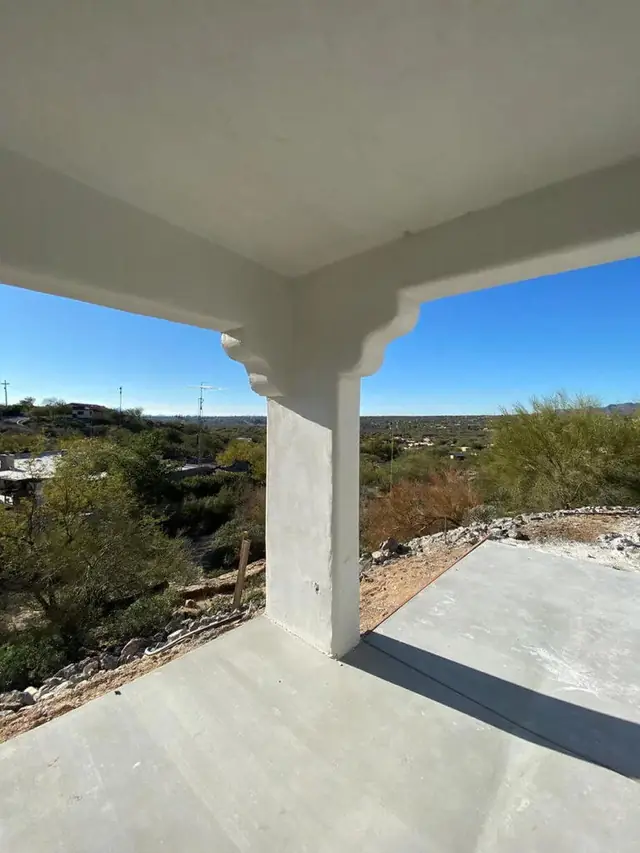
Most resilient-building advice arrives one hazard at a time. There is fire advice, and hurricane advice, and flood advice, and seismic advice, and each is usually sound on its own terms. The difficulty is that your house does not experience them one at a time. It sits in all of those conditions at once, for decades.
What an island site actually asks of a building
Consider what applies to the same structure on Oahu.
- Salt air, working on fixings and finishes continuously rather than seasonally.
- Sustained humidity, which is what feeds mildew and mould inside an assembly long before anything shows on a surface.
- Storm-driven water, which finds the junction between two systems first.
- High wind, which loads the building in ways that concentrate at its edges and openings.
- Seismic movement, which asks the structure to move without cracking.
- Fire, which in a dry season is a genuine risk to a great many sites.
Specify against those separately and you get a stack of upgrades: a fire assembly here, a flood detail there, hurricane strapping over the top, corrosion-resistant fixings because of the salt. Each addition is another component, another interface, and another thing that has to be installed correctly and maintained.
The case for one specification
Zenith Home Systems publishes a single description of the Composite Blocking System that covers several of these together. The company states the shell is fire-resistant, termite-proof, water-resistant, mildew-proof, rust-proof and mold-proof, engineered to withstand category 5 winds of 240 mph, and structurally engineered not to crack during an earthquake. Those are Zenith's own published figures for the system rather than independent verification, and they are worth reading as such.
Taken at face value, that is a different proposition from a stack of upgrades. One specification answering several hazards means fewer components, fewer interfaces, and fewer things whose correct installation you are relying on. It also means the resilience is not a line item that can be trimmed when the budget tightens late in a project, because by then it is the structure.
Termites belong on that list
It is easy to skim past termite resistance as a minor entry between the dramatic ones. On a warm, humid island it may be the entry that matters most in ordinary years. Fire is a risk that may never arrive. Termites are a certainty that arrives quietly and works for a long time before anyone notices, and the treatment cycle for a conventional structure is a permanent running cost with a permanent failure mode.
A structure whose core material offers nothing for a termite to eat removes that particular ongoing obligation. That is worth weighing alongside the more dramatic claims.
Where the hazards actually interact
The reason a combined specification matters is that these conditions are not independent of each other. Sustained humidity degrades the fixings that a wind rating depends on. Salt accelerates the same corrosion. A structure that has moved slightly in a seismic event has opened paths that water and embers can both use. Treating each hazard as a separate problem to be solved separately misses the fact that the failure of one protection is frequently what exposes the next.
That interaction is also why maintenance is not a footnote. A conventional building on an island site carries several overlapping treatment and inspection cycles, and the failure mode is rarely dramatic. It is a fixing that corroded, behind a finish, in a place nobody looked, for eleven years.
How to test a resilience claim
Three questions are worth asking of anyone, including of the material on this site.
First, is this the company's own claim or an independent verification? Both can be useful and they are not the same thing, and a business that is straight about which is which is telling you something about how it works. Zenith's figures are its own published claims about its system, and this article says so rather than dressing them up.
Second, does the claim survive contact with your site? A wind rating is about the structure. Whether your particular slope, exposure and access make that the binding constraint is a separate question, and it can only be answered by looking at the ground.
Third, what maintains it? A specification that depends on a coating being renewed, or a treatment being reapplied, is a specification with an ongoing obligation attached. Ask what happens if that obligation is not met for five years, because sooner or later it will not be.
Zenith works on Oahu from 2333 Alahao Pl in Honolulu, on (808) 743-6981, seven days a week from 10:00 AM to 7:00 PM. The most productive first conversation is about the exposure of your specific site.
Zenith Home Systems — (808) 743-6981
Call (808) 743-6981More articles
What actually makes a house fire resistant
Most of what gets sold as fireproofing is one item off a list of nine. The other eight are what decide whether a building survives.
One continuous shell, or assembled layers
Buildings mostly fail at their junctions. A shell built as a single member has far fewer of them.