Water
Coastal and Flood-Resistant Construction
The same shell detailed for salt, storm and standing water, which is the combination island building actually asks for.
One specification, several hazards at once
Ensure your home's durability and safety with our coastal and flood-resistant construction services. We implement specialized techniques and materials designed to withstand the challenges of coastal living, protecting your property from flooding and harsh weather conditions. This is the service where the Composite Blocking System is doing something genuinely unusual, and it is worth being precise about what. Most resilient-building specifications answer one hazard well and the others by addition: a fire assembly here, a flood detail there, hurricane strapping over the top. Zenith's published description of the CBS shell is a single specification that it states is fire-resistant, water-resistant, mildew-proof, rust-proof and mold-proof, engineered for category 5 winds of 240 mph and not to crack during an earthquake. For a house on an island, where salt air, storm surge, sustained humidity and seismic risk all apply to the same building on the same day, a single shell answering all of them is a materially different proposition from a stack of separate upgrades.
What coastal exposure actually does to a building
Salt air attacks fixings and finishes continuously rather than seasonally. Sustained humidity is what feeds mildew and mould inside an assembly long before anyone sees it on a surface. Storm-driven water finds the junctions between different systems first. The CBS response to all three is the same response: fewer junctions, because the roof and floor members are the same system as the walls.
Zenith states the shell resists water, mildew, rust and mould as part of the same specification that resists fire.
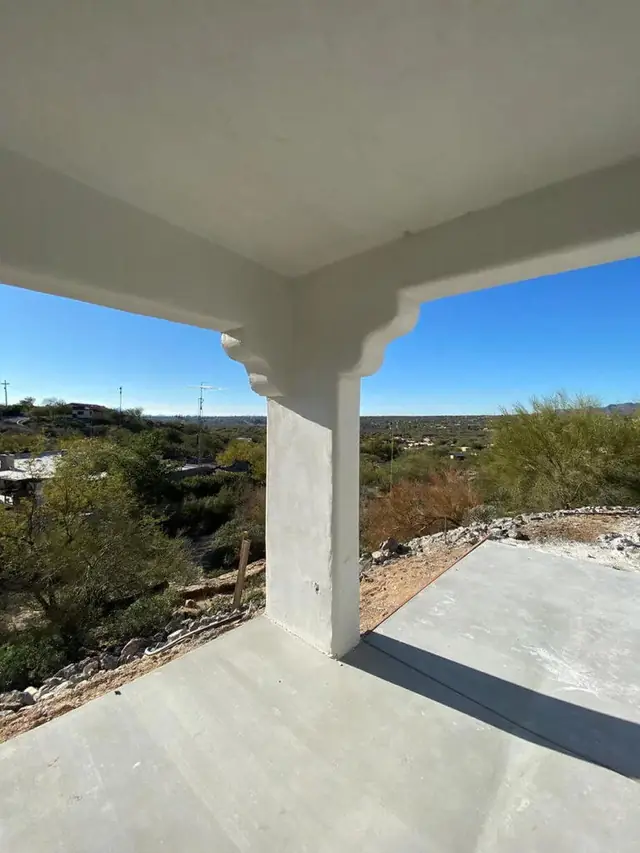
Water
Flood resistance is a detailing question as much as a material one
A material that does not absorb water is the start of flood resistance, not the end of it. What decides whether a building dries out afterwards is where water can sit, where it can get behind something, and whether the assembly can be inspected once the water has gone. Because a CBS shell is one continuous member rather than a stack of layers, there is less concealed cavity for water to occupy and less interface to open up when you need to know whether it did. Speak to Zenith about the specific exposure of your site before the design is fixed, since the levels and the approach to the ground floor are far cheaper to decide early.